SS-31
Also known as elamipretide, SS-31 has been studied in mitochondrial, cardiac, and skeletal-muscle research.
Experimental canine heart-failure studies · 2 primary studies
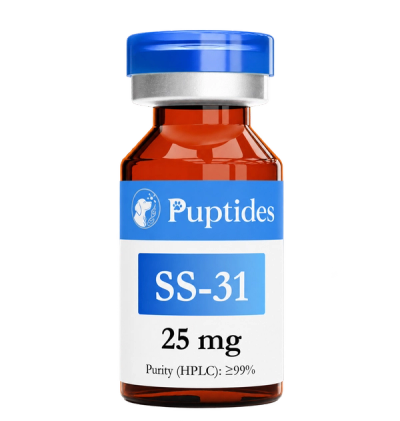
Puptides products.
Ingredients, amounts and bottle details.
A closer look at the research.
Start with what was studied, in which animals, and what the findings can tell us.
SS-31: cardiac and mitochondrial function
Researchers studied elamipretide, also called SS-31, for three months in dogs with experimentally induced heart failure. Selected cardiac and mitochondrial measures improved compared with saline.
Read the primary study Sabbah et al. · Circulation: Heart Failure · PMID 26839394What to keep in mind
This was a specific experimental disease model, not a longevity trial in companion dogs. The findings do not establish equivalence to another SS-31 preparation.
SS-31: skeletal muscle in a canine heart-failure model
The study examined skeletal-muscle fiber composition and mitochondrial function during elamipretide treatment. It reported changes in muscle structure and metabolism within the heart-failure model.
Read the primary study Sabbah et al. · ESC Heart Failure · DOI 10.1002/ehf2.12408What to keep in mind
Muscle measurements are different from demonstrated improvements in everyday activity or lifespan. The paper reports industry funding and an author consultancy.
How closely does the experimental heart-failure model match the condition and outcome being considered?
Research questions.
Does this research apply to every product?
Each study tests a particular ingredient or formulation under specific conditions. The same ingredient name on a different product does not make the results interchangeable. These studies did not test a Puptides product.
Will this help my dog live longer?
The studies cited on this page do not establish a lifespan benefit in dogs. “More good days” expresses our purpose; it is not a promise about a product.
How can I use these summaries?
Bring the study links and the question above to your veterinarian. They can put the research in the context of your dog's health, food, and current care. Our dog tools can help you put together a reading list for that conversation.
Related research.
Editorial update: October 30, 2026 · Not independently veterinarian-reviewedOur standards