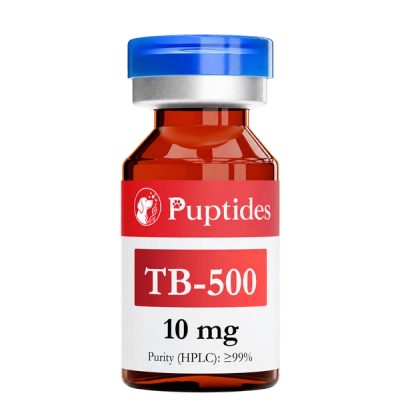
TB-500
The research behind TB-500, its metabolites, and its relationship to thymosin beta-4.
Rat + laboratory research · 1 primary study
Puptides products.
Ingredients, amounts and bottle details.
A closer look at the research.
Start with what was studied, in which animals, and what the findings can tell us.
TB-500: metabolism and laboratory activity
Researchers examined TB-500 and its metabolites, including wound-healing activity in laboratory experiments.
Read the primary study Primary laboratory and animal study · PMID 38382158What to keep in mind
This is not evidence of a treatment benefit in dogs. Evidence about full-length thymosin beta-4 should not automatically be attributed to a fragment sold as TB-500.
Which exact molecule is involved, and is the cited research about that molecule in dogs?
Research questions.
Does this research apply to every product?
Each study tests a particular ingredient or formulation under specific conditions. The same ingredient name on a different product does not make the results interchangeable. These studies did not test a Puptides product.
Will this help my dog live longer?
The studies cited on this page do not establish a lifespan benefit in dogs. “More good days” expresses our purpose; it is not a promise about a product.
How can I use these summaries?
Bring the study links and the question above to your veterinarian. They can put the research in the context of your dog's health, food, and current care. Our dog tools can help you put together a reading list for that conversation.
Related research.
Editorial update: October 30, 2026 · Not independently veterinarian-reviewedOur standards